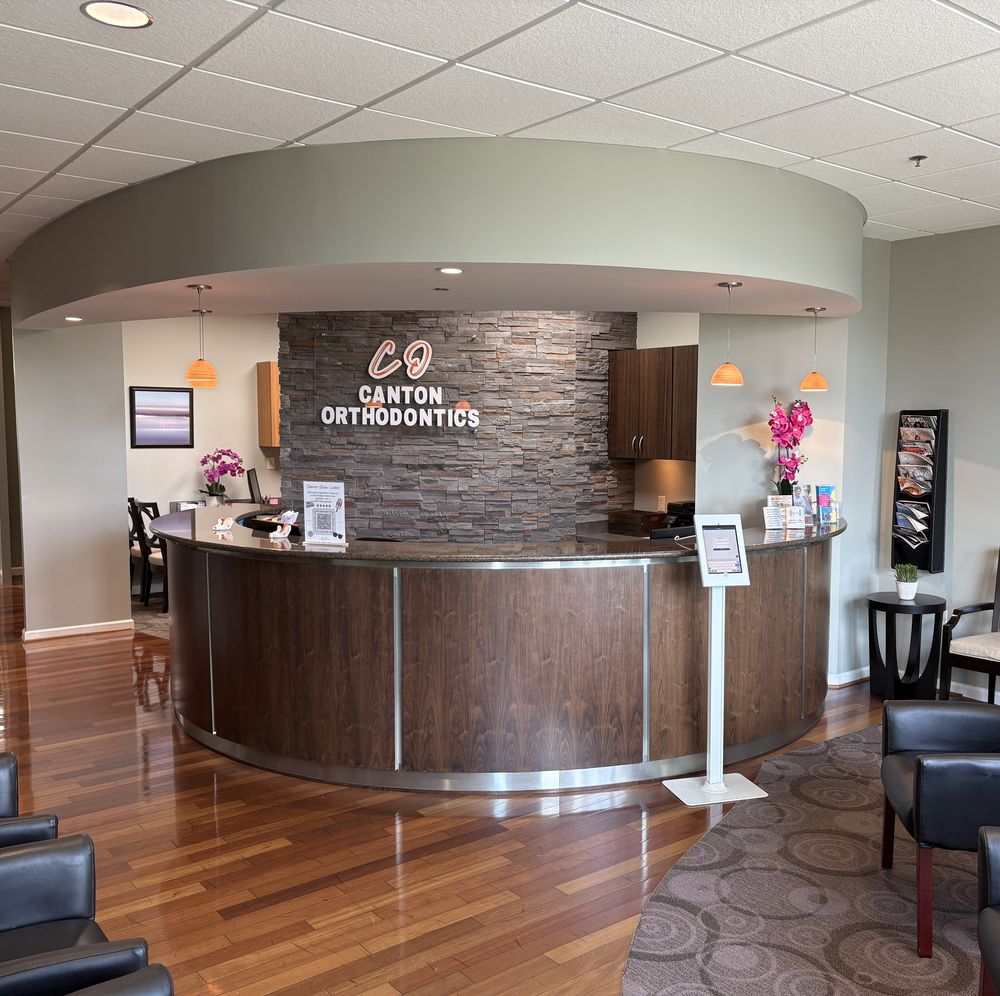

Wondering when a child should first visit an orthodontist? The American Association of Orthodontists recommends every child have their first orthodontic check-up by age 7. By that age, your child's permanent first molars and front incisors have typically erupted, giving our team at Canton Orthodontics a clear picture of how the bite is developing and whether early guidance could help.
This timing isn't random. By age 7, your child's permanent first molars and front incisors have typically erupted, giving orthodontists a clear picture of how the bite is developing.
Here's what surprises most parents: an early visit rarely means early treatment. Most kids who come in at age 7 simply get monitored over time. The goal is to catch potential issues while your child's jaw is still growing and easier to guide. At our Canton practice, this first visit is a free consult, so there's no barrier to getting answers about your child's smile.
If you notice obvious concerns before age 7, like difficulty chewing, mouth breathing, or teeth that look crowded, don't wait. Trust your instincts and schedule that visit sooner.
What Happens at Your Child's First Orthodontic Visit
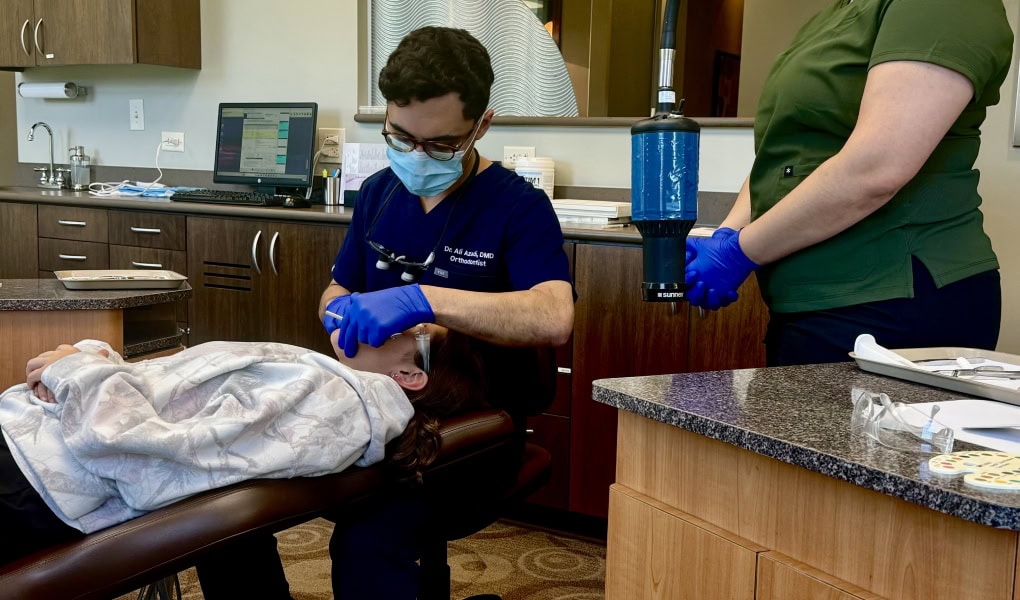
That first orthodontic visit is simpler than you might expect. Your child won't leave with braces or any appliances. Instead, think of it as a detailed look at what's happening now and what might happen as your child grows.
A typical visit at our Canton or Roswell office includes:
- Visual examination of teeth, jaw alignment, and how the bite comes together
- Digital X-rays or scans to see permanent teeth developing beneath the gums
- Discussion of oral habits like thumb-sucking or mouth breathing that could affect development
- Growth pattern assessment to predict how your child's jaw and teeth will change
After the exam, you'll hear one of three things:
- No treatment needed right now. Everything looks great. Come back in a year or two for another check.
- Growth monitoring recommended. There's something to watch, but it's not time to act yet. Your child joins a complimentary monitoring program.
- Phase 1 treatment suggested. A specific issue would benefit from early intervention while growth is still happening.
You'll have plenty of time to ask questions. Our team, led by a Board-Certified Orthodontist, walks you through exactly what we see and why we're recommending a particular path forward.
Benefits of an Early Orthodontic Evaluation
Why age 7? Because your child's jaw is still actively growing, and that creates opportunities that disappear later.
Guiding jaw development
When the upper jaw is too narrow, an expander can widen it while the bones are still soft and responsive. This same correction in a teenager or adult might require a more involved approach.
Preventing bigger issues
Crossbites, severe crowding, and underbites can worsen over time. Catching them early often means simpler treatment later.
Correcting harmful habits
Prolonged thumb-sucking or tongue-thrusting can reshape the jaw and push teeth out of alignment. Early intervention breaks these patterns before lasting changes occur.
Kids with front teeth that stick out are also more likely to chip or fracture them during falls or sports. Early treatment can reduce this risk and give parents real peace of mind during active years.
Building confidence
Children notice their smiles. Addressing visible crowding or spacing issues early can make a real difference in how your child feels about their appearance during formative years.
Simplifying future treatment
Phase 1 treatment doesn't always eliminate the need for braces later, but it often makes Phase 2 shorter and less complex. Our Board-Certified Orthodontist evaluates each child individually, so you'll get a recommendation tailored to your child, not a one-size-fits-all plan.
Phase 1 (Early) vs Phase 2 (Comprehensive) Treatment
Not every child needs two phases of treatment. In short, Phase 1 guides jaw growth and bite development in younger kids, while Phase 2 aligns all permanent teeth into their final positions once they've come in.
| Aspect | Phase 1 (Early) | Phase 2 (Comprehensive) |
|---|---|---|
| Typical age | 7-10 years | 11+ years |
| Primary focus | Jaw development, bite correction | Full alignment of all permanent teeth |
| Common appliances | Expanders, partial braces, space maintainers | Full braces or Invisalign |
| Duration | 6-18 months | 12-24 months |
| Who needs it | Children with specific skeletal or bite issues | Most orthodontic patients |
Phase 1 targets issues that are better addressed while growth is happening. Think of it as creating a better foundation. A palate expander, for example, widens the upper jaw to make room for permanent teeth and correct crossbites.
Once all permanent teeth have erupted, Phase 2 begins. This is when full braces or Invisalign align everything into its final position.
Many children skip Phase 1 entirely and do great with Phase 2 alone. The two-phase approach is reserved for specific situations where waiting would make treatment more difficult or less effective.
What Influences the Cost of Early Orthodontic Care
Let's talk about the money side, because we know it's on every parent's mind. At Canton Orthodontics, your child's initial consultation is complimentary. You get answers without any upfront commitment.
If Phase 1 treatment is recommended, the price depends on several factors:
- Type of appliances needed. An expander alone is less than a combination of expander plus partial braces.
- Length of treatment. More involved cases requiring longer treatment naturally run higher.
- Insurance coverage. Many dental plans include orthodontic benefits for kids. Our team helps you understand what your plan covers.
- Payment flexibility. Low monthly payment options make treatment accessible. Our payment calculator helps you see what fits your family budget.
Here's something worth considering: early intervention can actually reduce your overall investment in orthodontic care. Addressing jaw issues while your child is young may mean shorter, simpler treatment during the teen years.
Signs Your Child Should See an Orthodontist Now
While age 7 is the general guideline, certain signs warrant an earlier visit. Trust what you're observing at home.
Watch for these indicators:
- Early or late loss of baby teeth. Losing baby teeth much earlier or later than peers can signal underlying issues.
- Difficulty chewing or biting. If your child avoids certain foods or chews awkwardly, the bite may not be functioning properly.
- Mouth breathing. Chronic mouth breathing can affect jaw development and facial growth.
- Thumb-sucking past age 5. This habit can push teeth forward and narrow the palate.
- Crowded or misaligned teeth. Visible crowding of baby teeth often predicts crowding of permanent teeth.
- Gaps or spacing issues. Significant gaps may indicate missing teeth or jaw size discrepancies.
- Jaw shifting, clicking, or popping. These sounds can indicate joint issues or bite issues.
- Crossbite, overbite, or underbite. When teeth don't meet properly, it affects chewing, speech, and jaw health.
If you're noticing any of these, schedule a free consult at our Canton or Roswell office. It's always better to know what you're dealing with than to wonder. Early answers help you plan with confidence and give your child the best possible head start on a healthy smile.
Frequently Asked Questions
Is age 7 too young for braces?
Age 7 is the right time for an evaluation, not necessarily for braces. Most 7-year-olds who visit an orthodontist don't start treatment right away. The visit identifies whether early intervention would help or whether monitoring makes more sense. If treatment is recommended, it's usually a targeted approach like an expander rather than full braces.
Is it too late if my child is older than 7?
Absolutely not. While age 7 is ideal for catching certain developmental issues, orthodontic treatment works well at any age. Older kids, teens, and adults all achieve excellent results at our Canton and Roswell locations. You haven't missed a window. You've simply arrived at a different starting point, and our team is ready to meet you there.
Does my child need a referral from their dentist?
No referral is needed. You can schedule directly with our Canton Orthodontics practice anytime. That said, many dentists do recommend orthodontic evaluations when they notice developing concerns, and we work closely with pediatric dentists in the Canton and Roswell area to coordinate care.
How long does the first orthodontic visit take?
Plan for about 30 to 45 minutes. This gives us time for a thorough examination, any necessary X-rays, and a conversation about what we find. You'll leave with clear information about your child's orthodontic status and any recommended next steps.
Will my child need braces if we come in early?
Not necessarily. Many kids who come in at age 7 don't need any treatment. They simply get monitored as they grow. Others benefit from Phase 1 treatment but may or may not need braces later. The early visit gives you information, not an automatic treatment plan.
Does insurance cover the first orthodontic visit?
At Canton Orthodontics, the initial consultation is complimentary, so insurance coverage for that visit isn't a concern. If treatment is recommended, most dental plans with orthodontic benefits do cover a portion of children's orthodontic care. Our team reviews your specific coverage and explains your options before any treatment begins.
Getting your child's first orthodontic evaluation by age 7 is one of the simplest things you can do to set them up for a healthy smile. Whether your child needs early treatment, monitoring, or nothing at all, you'll have the information you need to make confident decisions for your family.
Our Board-Certified Orthodontist Dr. Ali Azadi and Dr. Farshid Nia welcome kids of all ages to our Canton Orthodontics offices in Canton and Roswell. Ready to see what's happening with your child's smile? Request your free consult today. Have a beautiful day!